by Valerie Bang-Jensen, author of Literacy Moves Outdoors.
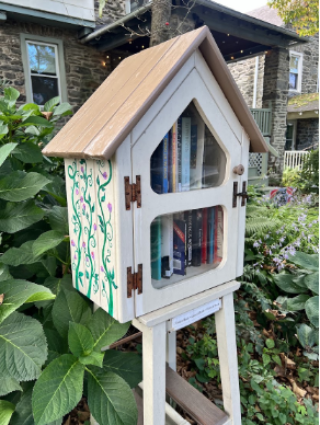 | 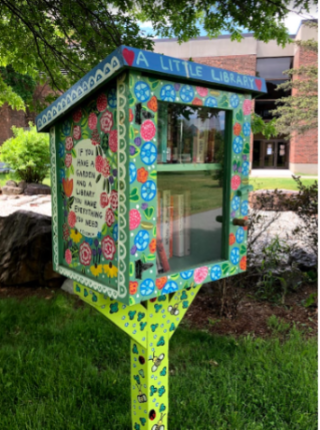 | 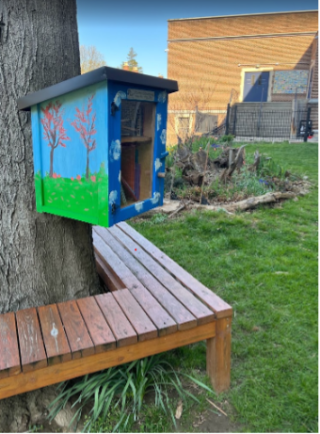 |
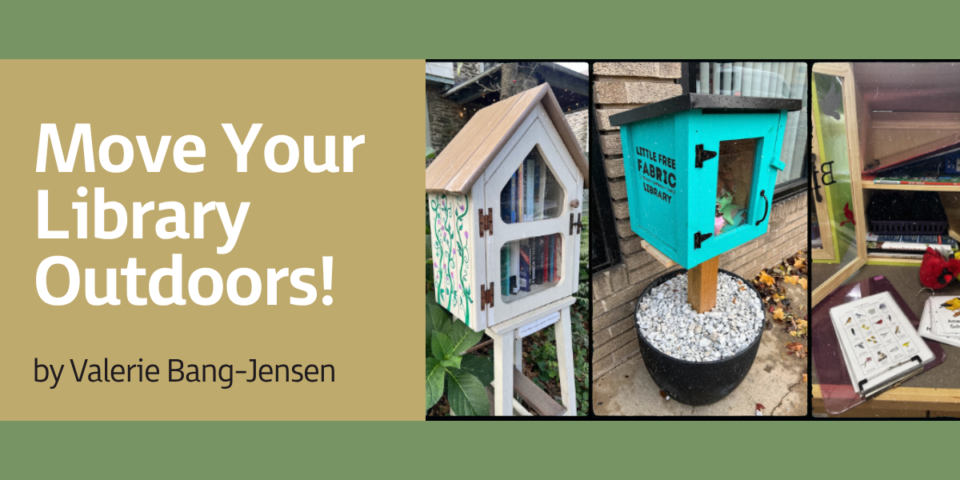
| Three Little Libraries painted by community or school members | ||
Little Libraries are becoming wonderfully ubiquitous; the Little Free Library counts 200,000 registered to date, in 182 countries and all 50 states. You probably see them in parks, neighbors’ front yards, at community gardens, near the local grocery store and in other–perhaps unexpected–places. Stocked with books, their premise is to make books available to everyone along the lines of Little Free Library’s motto, “take a book, share a book.” The Little Free Library organization’s website provides a history of the project, a global map of registered Little Libraries, directions for installing your own, and tips about sourcing books for your launch.
The Benefits of Little Libraries
While many Little Libraries are based in the broader community, there are great reasons to install them on school grounds. Little Libraries can offer more directed literacy experiences, and build on the core belief that offering free books encourages reading. An extensive study in Baltimore County Public Schools found that access to Little Libraries supported increased reading among students at low-income schools, BIPOC students, and English Language Learners. The study also found that making books available supports student choice, encourages more frequent reading through access to books, and helps build home libraries.
| A Note on Sourcing Books: Community Little Libraries rely on a constant swap of books: take one, and leave one if you can. This principle can hold true at schools, too, but you’ll want to have regular curation to be sure that the books available are a good match for your readers. Buy Nothing groups, Home-School Associations, local library give-away shelves, book club bonuses, and thrift shops are a good place to start developing the stash of books that will stock your library. |
Three Ways to Move Beyond Book-Swapping at Your School
In addition to their common book-swapping role, once established, teachers can connect Little Libraries to curricular goals and provide students experience with leadership and agency. Here are three ideas to get you started:
1. Teachers and students as curators: The small space and limited number of books provides an opportunity for student stewards to notice and apply what they are learning about characteristics of books. Challenge them to assess the books that will go into the library each week or month by inviting them to notice whether the current collection provides a range of genre, reading level, and themes and topics for the readers. With guidance, a small group of students can check the collection and rotate in new titles on a regular basis.
2. Library of Things: Many public libraries have expanded beyond lending books to include gardening tools, sewing machines, and other objects or tools. I have seen Little Libraries offering artwork, pieces of fabric, and model cars! What could this look like at school? Brainstorm with your students what their libraries might offer. Consider how you might build a library display connected to the curriculum; candidates could include decorated poems from a poetry unit, small sculptures or other visuals from art class, or objects from nature walks like colorful leaves, stones, or pinecones.
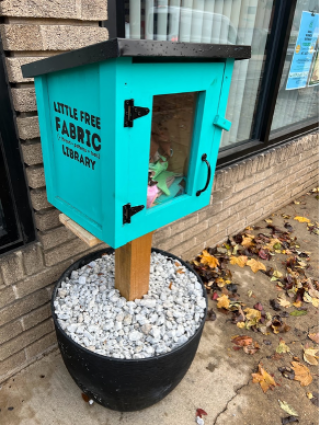 | 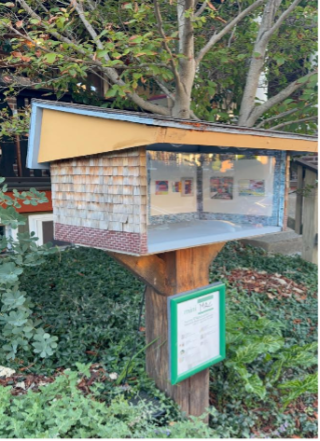 | 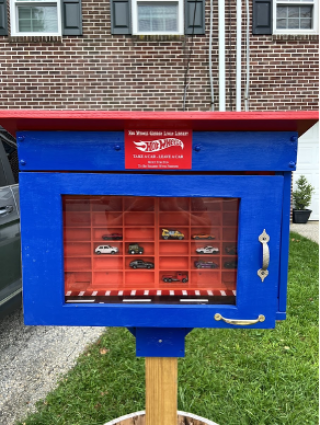 |
| Pieces of fabric | Mini-artwork | Matchstick cars |
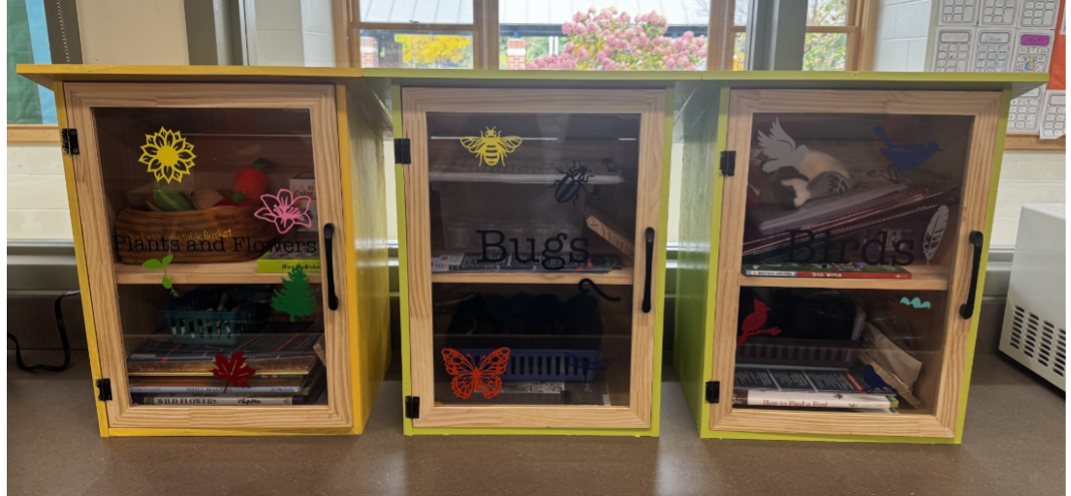
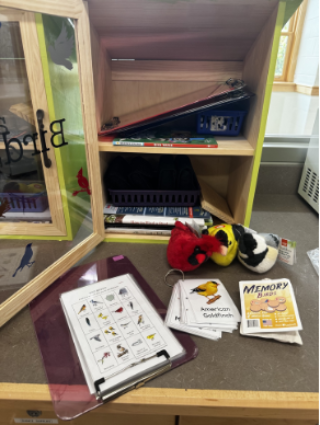
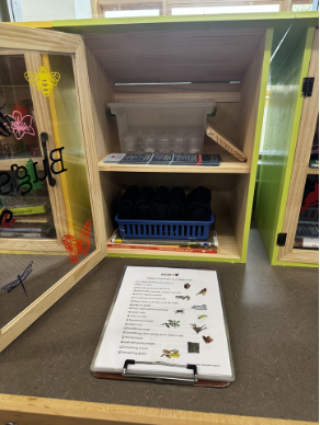
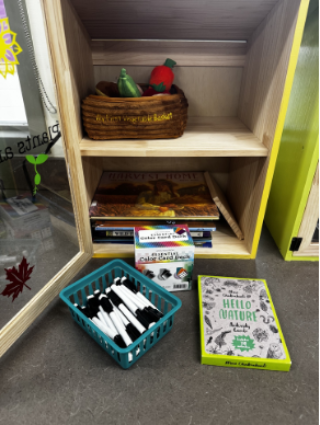
3. Support your science curriculum. Since the Little Libraries are already outside, build on science-related topics that are in your curriculum. Trees, pollinators, and cloud formation are common topics and a Little Library can house books and other materials for science learning. A team of multi-grade teachers developed three “Little Activity Libraries” with the themes of Bugs, Birds, and Garden/Plants. The Little Activity Libraries contain identification cards, games, writing implements, sets of related books, hand-held magnifying lenses, and more. They also include prompts for teachers to help students think about the NGSS crosscutting concepts as they appear in the books, activities, and outdoors. They have also established directions (below) so it’s clear to everyone how to use and maintain them once they are installed:
Try It: Set Up a Little Activity Library at Your School
Welcome to our Little Activity Library!
Take an Activity: Open the door and browse the available activities, books, and games.
Share an Activity: Have a spare, puzzle, or family-friendly game? Place it inside for someone else to enjoy.
Return & Reuse: If you take a game or project that can be reused (like a board game or a set of blocks), please bring it back when you are done so others can enjoy it.
Respect the Honor System: All items are free to use. Please do not take items and leave them in your classroom.
Keep It Clean: Help us keep the library tidy. Close the door firmly after you browse to protect the supplies.
Little Activity Libraries: Plants & Flowers, Bugs, Birds | ||
|---|---|---|
 | ||
 |  |  |
| Many thanks to Vasanthi Meyette and her team at the Shelburne Community School in Shelburne, Vermont for permission to share their ideas. | ||
For further reading about installing, stocking, and maintaining a Little Library:
- Little Free Library website (includes DIY options!)
- A practical overview for establishing a Little Free Library at your school from We Are Teachers . Author Jill Staake presents a clear guide for setting up and maintaining Little Libraries at schools.
Children’s books featuring libraries:
About the start of Little Libraries: Little Libraries, Big Heroes (Paul)
Other books about libraries:
Down Cut Shin Creek: The Pack Horse Librarians of Kentucky (Appelt)—chapter book
The Library (Stewart)
My Librarian Is A Camel: How Books Are Brought to Children Around the World (Ruurs)
Waiting for the Biblioburro (Brown)
The Librarian of Basra: A True Story from Iraq (Winter)
Miss Dorothy and Her Bookmobile (Houston)
That Book Woman (Henson)
Mary on Horseback: Three Mountain Stories (Wells)—chapter book

Valerie Bang-Jensen is Professor of Education at Saint Michael's College, where she has earned the college’s Rathgeb Teaching Award. She received her A.B. at Smith College and MA, M.Ed., and Ed.D. degrees from Teachers College, Columbia University. Valerie has taught in K-6 classrooms and library programs in public and independent schools in the U.S. and Paris, and was the district elementary writing coordinator in Ithaca, New York. She serves as a consultant for museums, libraries, schools and gardens for children. Valerie's areas of interest include children's literature, nonfiction, and connections between literacy and first-hand experiences. Valerie co-founded the Teaching Gardens of Saint Michael’s College, including one called Books in Bloom, which features flowers found in children’s books.