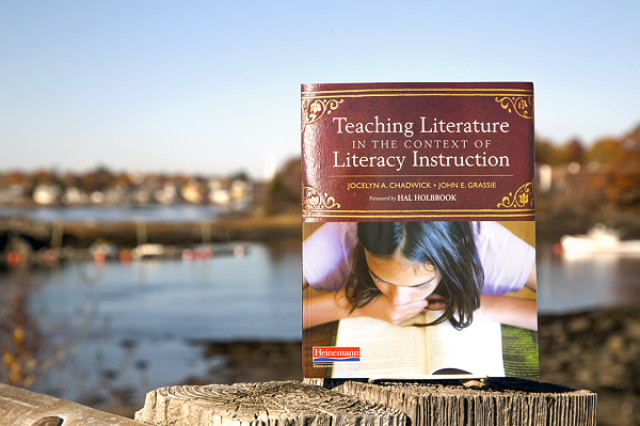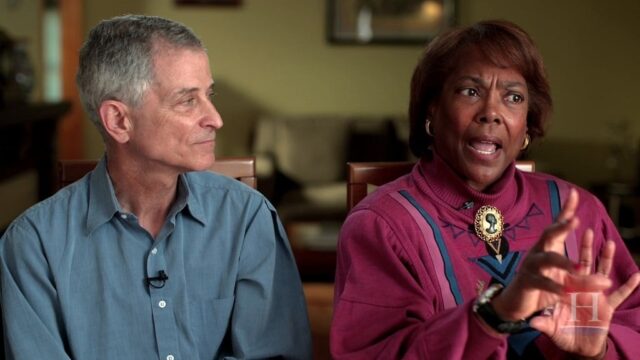
In Teaching Literature In The Context Of Literacy Instruction, coauthors Chadwick and Grassie explore how the familiar literature we love can be taught in a way that not only engages students but does so within the context of literacy instruction, reflecting the needs of today’s classrooms. In part one of our blog series, the authors suggest how making pie connects to the work being done today by ELA specialists.
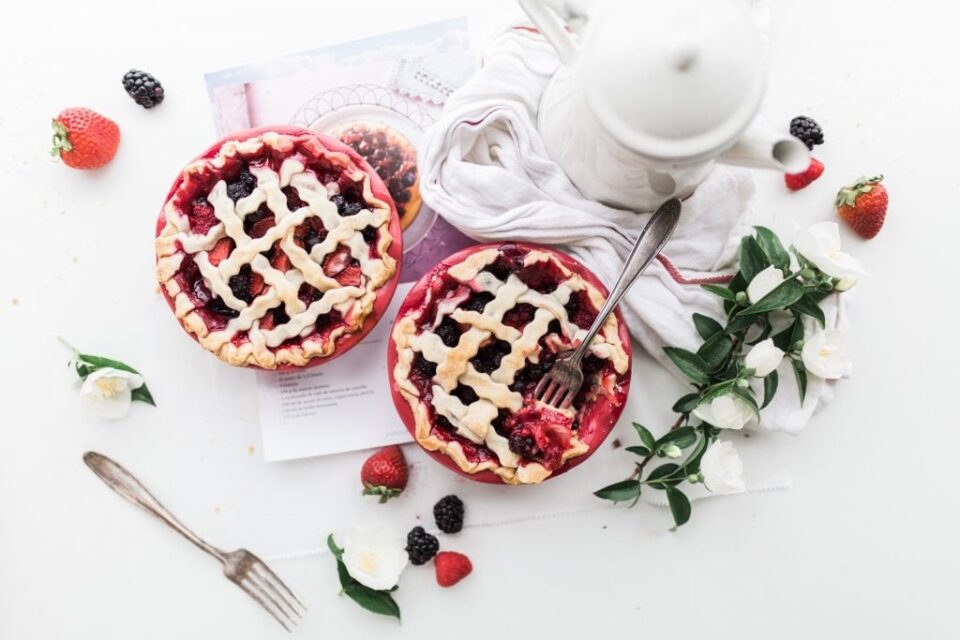
The perfect, homemade PIE: the crust, the custard, the meringue—all handmade, all “from scratch,” absolutely no preservatives, absolutely delicious. I grew up with my mother, maternal grandmother, and maternal great-grandmother maintaining this family tradition of making the perfect pie, perfection on a plate. (Chocolate, butterscotch, coconut, and lemon—the only flavors they made—perfection on a plate. Even my paternal grandmother asked both my grandmother and mother to make pies for the Chadwick family reunions. This was saying something, indeed.) Our teaching as ELA specialists reminds me often of pie-making, real pie-making—the “from scratch” kind.
P: preparation and plan and purpose
I: instruction
E: engagement
P: Preparation and Plan and Purpose:
Before we can begin mixing, stirring, and measuring, we must plan; we must have our mise-en-scène. How we present and share texts, arrange the environment, “set” the environment, listen to our students, hear their voices, feel and interpret their moods and intonations and expressions, divest ourselves of codifications or stereotypes, create activities—all must combine to move forward our instructional purpose.
As a profession, we have been inundated with all sorts of professional development (PD)—both effective and ineffective. But, we also benefit from sharing and learning from each other, and we must continue to foment this kind of PD. Technology boosts this kind of PD, offering amazing collaborations and workshops that provide immediacy and consistency not heretofore possible. John and I often use web platforms to engender sustained and entirely collaborative planning and preparation with teachers and, increasingly, with students. Relying on this type of preparation, we can introduce, discover, explore, and share resources that complement and enhance assigned texts—primary, secondary, visual and aural arts. We find this approach keenly useful, especially since we have access to, have researched, and have used resources, databases, and ancillary materials, which teachers and students may not have the time, resources, or access to locate.
I: Instruction
Once we have our plan with its pieces in place, we move on to the process of instruction, the actual doing. Here, we take a slight right, as a “sort of” right turn is described in New England, from the process of baking. Why? Unlike my matrilineal pies, which allow for no recipe deviation, instructing students in ELA requires, even demands, adaptation, vibrancy, energy, observation, investment, full attention, and content awareness: both broad and specific knowledge-base. No two groups of students are the same. No one class of students learns in the same fashion or process at the same rate. No students have all the same experiences, backgrounds, perspectives, or beliefs, regardless of how they may appear to be similar. Most importantly, our consciously allowing the literature to speak to our students through their lenses, while facilitating their understanding of that same text through the writer’s lens and context, necessarily makes texts relevant and come alive for our students. We foment student-ownership. We call this instructional process “working to see literature with new eyes.”
E: Engagement
The perfect pie most decidedly does not mix, blend, whip, separate, measure, or bake itself. The baker cannot even dream of walking away and tackling another task until all is done. We, too, must remain engrossed, absorbed, and connected to our students—every period, every day. Of course, as ELA teachers we not only know this but also we know how draining this process can be. And yet, we do it because we know we must. It is who we are; it is our mission, as we see and understand it. Consequently, the engagement no longer looks as it did in the past, not even ten years ago. As our students change with each generation, so too do their needs and aspirations, experiences, fears, and comprehension. Technology, social media, globalization, current events, and the texts themselves affect student engagement and how we construct that engagement every day. As Dewey says, we no longer deposit knowledge as though students are static institutions who parrot back with little or no comprehension of how this knowledge even begins to fit into their real world, a world now interdependent on global literacy. Rather, we are partners, co-explorers, and resources in the lifelong process of learning and discovery and literacy.
These three “ingredients” blended with and held together within the context of literature (canonical, modern, fiction, nonfiction), our beloved and preferred mode, create the perfect instructional pie for our twenty-first-century students. Just as visual and sensory perfection represent the culinary purpose of the perfect pie, the literature we teach to instill in our students a substantive and constant lifelong literacy undergirds our instructional ELA mission from PreK through college.
♦ ♦ ♦ ♦
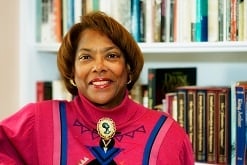

Jocelyn A. Chadwick has been an English teacher for over thirty years—beginning at Irving High School in Texas and later moving on to the Harvard Graduate School of Education where she was a professor for nine years and still guest lectures. Dr. Chadwick also serves as a consultant for school districts around the country and assists English departments with curricula to reflect diversity and cross-curricular content. For the past two years, she has served as a consultant for NBC News Education's Common Core Project for Parents, ParentToolkit. In June 2015, Chadwick was elected Vice President for the National Council of Teachers of English.
John Grassie is a veteran broadcast journalist, with more than 25 years’ experience producing news coverage, program series, and documentaries for Public Television, NBC News, and Discovery. During his broadcast career, Grassie’s work received numerous awards for excellence in journalism.