How do you approach teaching difficult texts? With confidence? With caution? With a touch of dread?
Across his career, Kelly Gallagher has returned to this topic again and again. How much scaffolding is enough? When does support become overhelping? And how do we create conditions where students can wrestle productively with challenging ideas? In this excerpt from The Teaching Life, Kelly offers practical framework for teaching difficult texts that reflects decades of classroom experience.
When asking students to tackle difficult reading, you might consider the following steps:
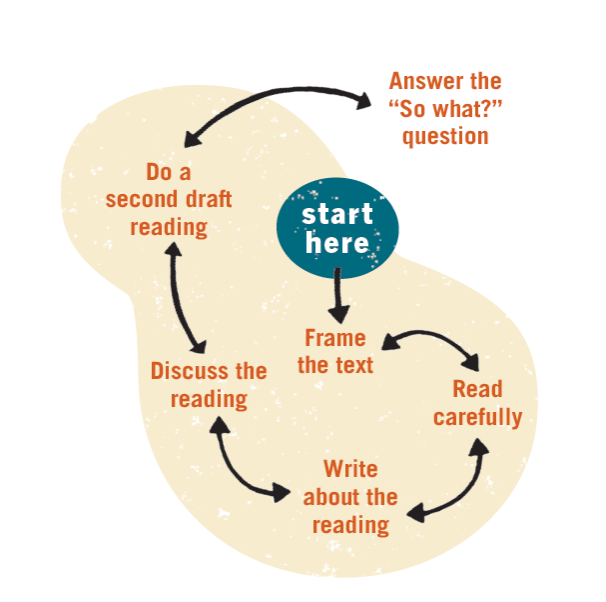
Here is a breakdown as to why each of these stages is important.
- Frame the text. One major reason a given text is difficult for students is because they do not possess the necessary prior knowledge. Students may lack understanding of keywords or concepts. If this is the case, what the teacher does before the reading commences is of utmost importance. Ask yourself, “What can I do to position my students to have a successful reading?”
- Read carefully. How will you have the students read the text? Perhaps you might read the beginning of the chapter out loud to help them gain momentum? Or place students in a share-pair reading? Or have them read silently? Regardless, it often helps to provide them with a purpose for the reading (e.g., “As you read this, make sure to pay close attention to _______.”).
- Write about the reading. This is not to be confused with answering teacher-generated questions. Instead, have students generate their own thinking. Ask them, “What is worth thinking about?” or “What surprised you when reading this?” I liked when students wrestled with their thinking via writing before discussing the reading with others. They have to think before they can think. Writing greases the wheels before the transition to discussion.
- Discuss the reading. Our comprehension deepens when we talk about our reading with others. Position students to have meaningful conversations. Start at the shoulder-partner level, before opening the talk to small groups and whole-class discourse. Remember, cold calling (done warmly) encourages attention from every student.
- Do a second draft reading. Complex text demands revisitation. When students reread, they move beyond surface-level reading and into deeper reading. This does not mean they need to read the chapter three times; what it does mean is that there are passages within the chapter that should be read more than once. Sometimes I picked a key passage to revisit; other times, I had students identify parts they deemed worthy of spending more time thinking about.
- Answer the “So what?” question. Upon completion of a chapter, unit, or book, my students were asked to reflect on the value of what they read (“You studied X—so what?”). Often, my essay question at the end of the unit would be as follows: “We just spent three weeks studying _____. What is the value in doing so? What will you take away from this experience?” Planning a unit that led students to this question helped me to keep relevance in the forefront of my teaching.
The steps above are not meant to suggest a rigid lockstep process. Notice the arrows point both ways. For example, you might frame the text, launch your students into reading, and then realize you need to back up and provide more framing. Or you may have them discuss the reading and then return to writing some more. The steps are recursive, and the art of teaching difficult text resides in the decisions a teacher must make in real time as students grapple with the text. Teaching complex reading is a constant struggle to find that sweet spot between “Am I not helping them enough?” and “Am I helping them too much?”
One other note: We all know there are many steps in the writing process (e.g., brainstorming, drafting, eliciting feedback, revision, editing), but we do not go through the entire process every time we write. Sometimes we churn out a quickwrite and move on. Likewise, there is a value in knowing all the steps listed above in the reading process, but this does not mean we go through the entire reading process every time we read. Sometimes, we read something once and move on. Again, it comes down to teacher judgment.