by Jennifer Serravallo
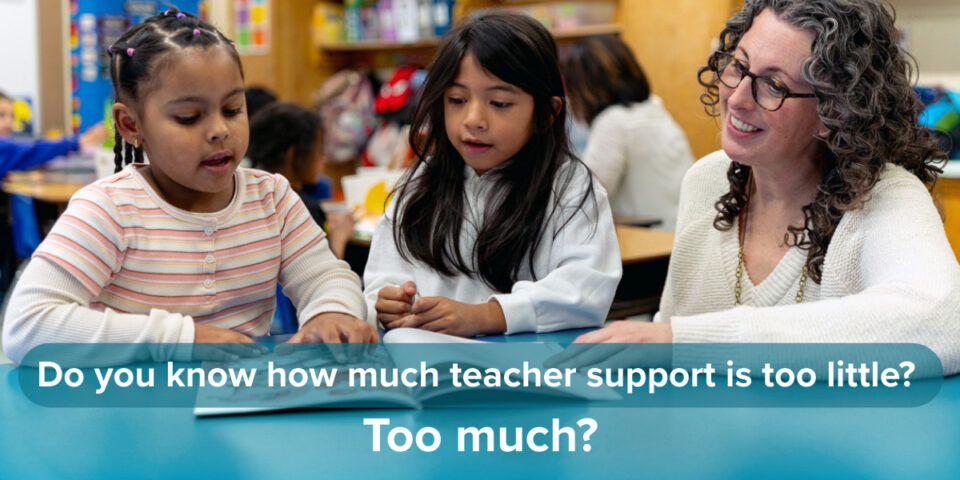
Providing students with the right amount of support at the right moment is key. Offer too little support, and you risk leaving students frustrated and unable to achieve their learning objectives. Offer too much, and students aren’t doing the work, you are.
A principle of explicit instruction is utilizing gradual release, though this doesn’t mean that you always have to start with heavy support and move, in a linear fashion, to student independent practice. Instead, key choices you make during planning and instruction allow you to flexibly offer only the amount of support students need. This ensures they are moving to independent application of the learning as soon as they can, but you aren’t expecting too much of them before they are ready.
LESSON TYPE CHOICES
For both reading and writing lessons, you will want to think about the level of support each lesson type offers.
For example, reading lesson types like read aloud, close reading, and shared reading provide students with a lot of support—you are doing the reading with or for them, thinking aloud to model strategies, and prompting them regularly to ensure their engagement with the text. On the other end of the spectrum, partnership and clubs require more independence from students. They must come prepared to discuss their reading, while you listen in and provide strategies and feedback in response to what you hear during their conversations.
Writing lessons that invite students to study mentor texts (guided inquiry lessons) require more independence from student writers. At the other end, guided writing, interactive writing, and shared writing provide more teacher support through modeling, and more frequent prompting and feedback.
TEACHING METHOD CHOICES
Regardless of the lesson type, in both reading and writing instruction, you will select from a range of teaching methods that offer varying levels of support during the lesson.
- Demonstration: Tell students what you are going to show them, explicitly state the steps you will use, and model each step.
- Shared Practice: Invite students to practice with you, reading chorally, or participating in the writing composition by sharing the pen or offering suggestions.
- Example and Explanation: Provide a mentor text and ask readers to explain how the author’s choices impact the text or ask them to identify some of the writer’s moves that they would like to try in their own writing.
- Guided Inquiry: Guide students to notice and name examples aligned to the lesson objectives.
STRATEGY CHOICES
Next identify which strategies will offer students the “how to” to bridge from what they can currently do to what the text or task demands. Using reading or writing skill progressions can help you translate your assessments of student work to doable next steps. When a strategy is brand new, or the text or task is very challenging, consider higher-support lesson types and teaching methods.
PROMPTING & FEEDBACK CHOICES
During the lesson, you’ll make choices about the amount of support you offer in response to students. Listen to and observe students carefully. In general, prompts or feedback that offer students a demonstration, those where you briefly explanation, or ones when you reiterate multiple steps of a strategy or correct misconceptions offer greater support. Prompts that are brief or open-ended or provide students with positive feedback support students in moving toward greater independence.
For example, imagine, student writers are busily writing using a strategy you’ve taught them. As you move around the room, you notice a couple of students who skip a step of the strategy. You might offer a quick prompt, “Don’t forget about [step].” Contrast this to the higher level of support you would be providing if you noticed that most of the class was stuck. You would probably take the time to provide a demonstration, reiterating the steps to make the strategy clearer.
You make hundreds of choices every day about the level of support your students need to achieve their learning objectives. Throughout any given day you will be using a skillful mélange of choices combining both low and high levels of support. And for many of these choices you’ll be adjusting on the fly as you pivot to meet the needs of the students in your classroom, always with the goal of gradually releasing support so students can be independent.
Let’s look at how this all comes together in practice in this short video debrief below of a whole-class read-aloud and whole class conversation. Note that the read aloud lesson is a structure that offers high support—you’ll hear me talk about the think-alouds and frequent prompting to invite students to turn and talk. Plus, I read the text to them. Whole class conversations, in contrast, require less support. You’ll hear me talk about the teacher’s role as an observer and coach who chooses strategies and prompts in response to what students need.

Jennifer Serravallo is the author ofThe New York Times' bestselling The Reading Strategies Book 2.0 and The Writing Strategies Book. These and some of her other titles have been translated into Spanish, French, Italian, and Chinese. Her popular books and resources help teachers make goal-directed, responsive, explicit strategy instruction doable in every classroom. Her newest titles are The Reading Strategies Book 2.0; Teaching Writing in Small Groups; A Teacher’s Guide to Reading Conferences, and the assessment and teaching resource Complete Comprehension for Fiction and Nonfiction.
Jen is a frequently invited speaker at national and regional conferences. She and her team of literacy specialists travel throughout the US and Canada to provide full-day workshops and to work with teachers and students in classrooms. She and her team are also experienced online educators who regularly offer live webinar series and full-day online workshops.
Jen began her career in education as an NYC public school teacher. Now as a consultant, she has spent the last twenty+ years helping teachers across the country create literacy classrooms where students are joyfully engaged, and the instruction is meaningfully individualized to students' goals. Jen served as a member of Parents Magazine Board of Advisors for education and literacy, and is on the NYC Reads Advisory Council as the city works to bring Science of Reading, Writing, and Learning-based practices to every classroom.
Jen holds a BA from Vassar College and an MA from Teachers College, where she has also taught graduate and undergraduate classes.
Learn more about Jen and her work at Hein.pub/serravallo, on Twitter @jserravallo, or Instagram @jenniferserravallo.